Watch-Only Bitcoin Wallets and xPub Privacy: What You Need to Know
Watch-only Bitcoin wallets are useful when you want to monitor a hardware wallet without putting its private keys on an internet-connected computer. But there is an important detail many users overlook: the public information that makes monitoring possible can also reveal a significant amount of information about your wallet.
This is where the xpub becomes important. Understanding what an xpub is, what it can reveal, what it cannot do, and how it is handled by wallet software is essential if you care about Bitcoin security and financial privacy.
What is a watch-only Bitcoin wallet?
A watch-only wallet is a wallet configuration that allows you to monitor Bitcoin addresses, balances and transactions without having the private keys needed to spend the coins.
This makes watch-only wallets particularly useful with hardware wallets. Your hardware wallet can keep the private keys protected, while another device can be used to check balances, generate receiving information and prepare or inspect transactions.
The important distinction is that the monitoring device does not have the secret material required to sign a transaction. If the computer running the watch-only wallet is compromised, an attacker may be able to see wallet information, but that does not automatically give them the ability to spend the Bitcoin.
Why would you use one?
Imagine that your Bitcoin is stored on a hardware wallet that you keep disconnected from your everyday computer. You still want to know whether a payment arrived, check your balance or prepare a transaction without connecting the signing device every time.
A watch-only wallet can provide that monitoring layer. It can contain public wallet information while the hardware wallet remains responsible for protecting the private keys and authorizing spending.
This type of setup is not unusual. Sparrow Wallet, for example, explicitly supports an xPub / Watch Only Wallet that can see transactions but cannot spend them directly.
Where does the xPub come into the picture?
To understand this, it helps to look at how modern Bitcoin wallets are structured.
Hierarchical deterministic wallets, commonly called HD wallets, derive a large family of keys from a common seed. BIP-32 defines a system for creating this hierarchy and, importantly, allows public keys to be derived without exposing the corresponding private keys.
An extended public key, commonly represented as an xpub on Bitcoin mainnet, contains public information associated with a particular point in that key hierarchy.
This is much more useful than simply giving a wallet one Bitcoin address. Software can use the extended public information to derive compatible public keys and addresses within the relevant branch of the wallet.
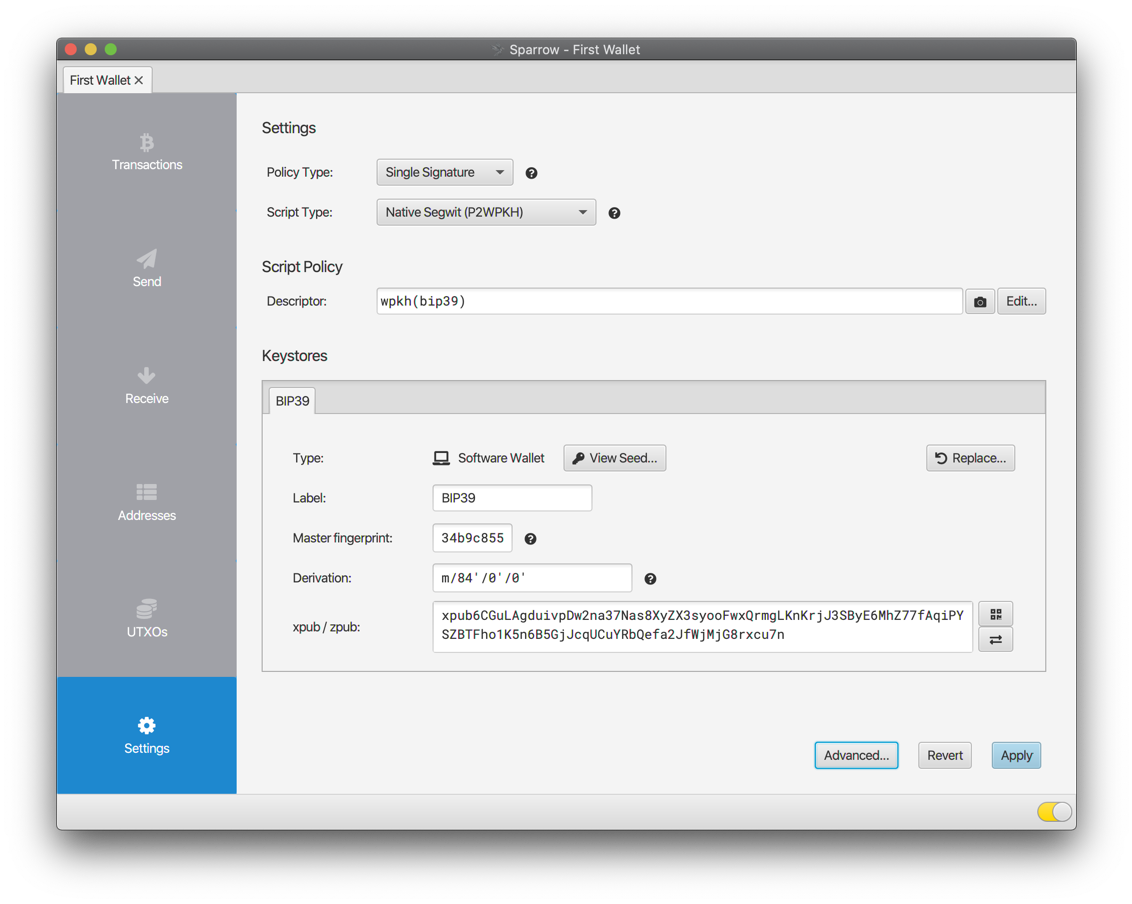
xPub does not mean private key
This distinction is critical because the terms can sound confusing when you first encounter them.
| Information | What it is used for | Can it spend? |
|---|---|---|
| Bitcoin address | Receive funds and identify a specific output destination. | No |
| xpub | Provide public key information from a wallet branch and help monitor addresses. | No |
| Private key | Sign transactions and authorize spending. | Yes |
| Seed phrase | Recover the wallet and recreate its key hierarchy. | Can lead to spending access |
So, is an xPub safe to share?
This is where the answer becomes more nuanced.
An xpub does not give an attacker the same spending capability as a private key. However, that does not mean it is harmless information to publish.
The official BIP-32 documentation specifically distinguishes the security implications of public and extended public keys. It notes that leaking a public key can mean loss of privacy, while extended public keys require additional care because they correspond to an entire subtree of keys.
The privacy difference between an address and an xPub
A single Bitcoin address gives someone visibility into activity associated with that address and the transactions connected to it.
An xpub can be considerably broader. Because it belongs to a branch of a deterministic key hierarchy, compatible software can derive public keys below that point in the hierarchy when the derivation structure permits it. BIP-32 describes this public derivation mechanism for non-hardened child keys.
That means accidentally publishing an xpub can be very different from accidentally publishing one receiving address. The potential privacy exposure can cover a much larger portion of the wallet.
What can someone learn from an xPub?
The biggest misconception about xpubs is that their only purpose is to display a wallet balance. In reality, an extended public key can represent a much broader set of public wallet information.
Because an HD wallet derives multiple keys from a structured hierarchy, compatible wallet software can use the appropriate public derivation path to generate public addresses belonging to that wallet branch.
This is exactly what makes an xpub useful for a watch-only wallet: the monitoring software can know which public addresses belong to the wallet without receiving the private keys required to spend the coins.
The same property creates the privacy problem. If another person or service obtains the relevant xpub and has enough information to interpret its derivation structure, they may be able to associate multiple addresses with the same wallet.
Why an xPub can be more sensitive than a Bitcoin address
Bitcoin addresses are already public information. Anyone can inspect the blockchain and see transactions involving a known address.
The problem becomes larger when multiple addresses can be linked together. If someone can determine that several receiving addresses belong to the same wallet, they may be able to build a much clearer picture of its activity.
This can include information such as transaction frequency, approximate wallet activity, addresses used to receive funds and relationships between different transactions.
None of this requires the attacker to obtain your seed phrase. The blockchain itself is public. The xpub can simply make it easier to associate public blockchain information with the same wallet.
What an xPub does NOT reveal
It is equally important not to exaggerate the risk. An xpub is not equivalent to a private key or recovery phrase.
Someone who obtains your xpub does not automatically obtain the secret keys needed to sign a Bitcoin transaction.
| Information obtained | Potential consequence |
|---|---|
| One Bitcoin address | The associated public blockchain activity can be inspected. |
| xPub | A broader set of addresses and wallet activity may become linkable, depending on the wallet structure and information available. |
| Private key | The corresponding funds can potentially be spent by signing a valid transaction. |
| Recovery phrase | The wallet can potentially be restored, giving access to its private keys. |
Watch-only security is not the same as privacy
This distinction is one of the most important concepts in this entire subject.
A watch-only wallet can be a useful security measure because the computer used for everyday monitoring does not need to contain your private keys. If that computer is compromised, the attacker does not automatically gain the ability to sign a transaction.
But that does not mean the wallet is private.
The software still needs information about the Bitcoin blockchain to display your balance and transaction history. The privacy implications depend partly on how that information is obtained.
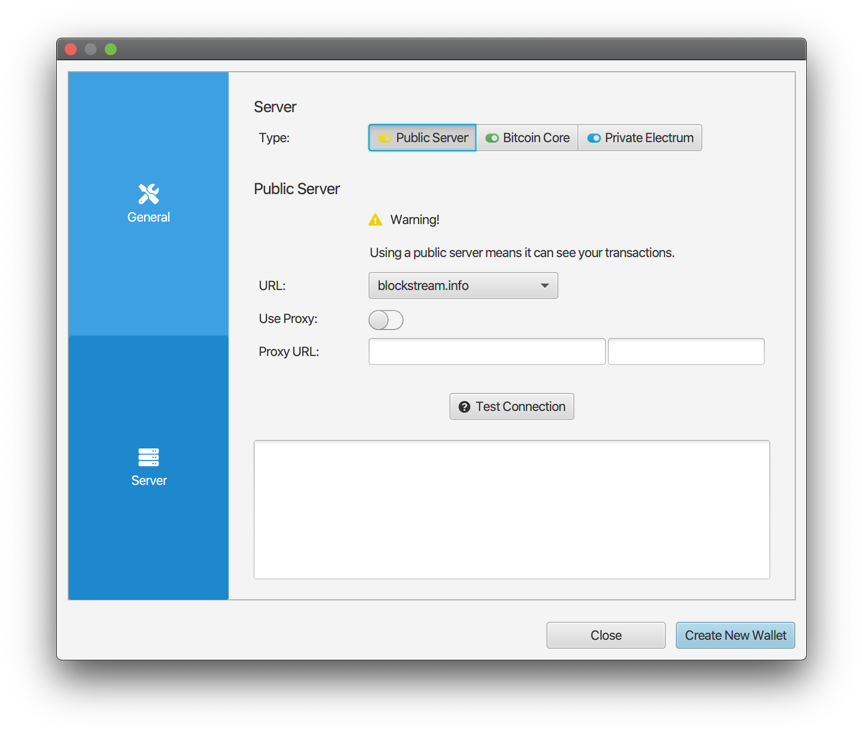
The hidden privacy issue: your blockchain data source
Suppose you create a watch-only wallet using an xpub and then connect the wallet to a public server.
The server needs to provide the blockchain information that allows the application to determine which transactions belong to the addresses being monitored.
This creates an important privacy consideration: the server may be able to associate the public wallet information it receives with the blockchain activity it returns.
Sparrow's official Quick Start documentation explicitly warns that using a public server means sharing public key information, and therefore privacy, with whoever operates that server. Sparrow also explains that users can instead connect to a Bitcoin Core node or a private Electrum server. 1
Protecting your seed phrase protects your ability to spend. Protecting your xpub and blockchain data connections protects your privacy. These are related, but they are not the same security problem.
Public server vs. your own node
A public server is convenient because you do not have to operate the infrastructure yourself. For someone learning how Bitcoin wallets work, this can make getting started much easier.
The trade-off is privacy. Sparrow states that connecting to a public server shares public key information and therefore wallet privacy with the server operator.
Connecting compatible wallet software to your own Bitcoin Core node changes the trust model. Instead of asking an unrelated public server for your wallet's blockchain information, your own infrastructure can provide that information.
Sparrow documents direct connections to Bitcoin Core as one of its supported configurations.
Does using your own node make Bitcoin anonymous?
No. This is another common misunderstanding.
Running your own node can improve control over the information your wallet software sends to third parties, but Bitcoin transactions are still recorded on a public blockchain.
Your own node does not erase transaction history, unlink addresses automatically or make every transaction anonymous.
It is better to think of a personal node as one part of a broader privacy strategy rather than as an anonymity switch.
Where Tor fits in
Network privacy is another layer. Some wallet software can use Tor to reduce the exposure of your real IP address when communicating with external services.
Blockstream's documentation notes that Tor can anonymize the IP address associated with the local device, while also warning that Tor is only one part of Bitcoin privacy and does not prevent blockchain analysis.
In other words, there are several different privacy layers:
- Private keys: protect the ability to spend.
- xPub: protect against unnecessary exposure of wallet structure.
- Blockchain backend: consider who receives your wallet queries.
- Network connection: consider what your IP address reveals.
The practical takeaway
You do not need to avoid watch-only wallets simply because xpub privacy exists. The technology is useful precisely because it lets you separate wallet monitoring from private-key storage.
The important thing is understanding the information that moves between your hardware wallet, watch-only application, blockchain backend and network connection.
A secure setup protects your keys. A privacy-conscious setup also controls who can observe the public information surrounding those keys.
How to use a watch-only wallet more safely
Creating a watch-only wallet is not inherently dangerous. The important part is understanding exactly what information you are importing and where that information will be stored or transmitted.
Before importing an xpub, first identify the wallet, account and derivation path it belongs to. An xpub by itself is not always enough to describe an entire wallet correctly: compatible software also needs to understand how the public keys should be derived.
This is why two wallets can contain apparently similar public information but still display different addresses if they use different derivation paths or wallet standards.
Verify the derivation path
The derivation path tells wallet software how keys are organized within the hierarchical deterministic wallet structure.
For example, Bitcoin wallets can use different account and address structures depending on whether they use legacy, SegWit or native SegWit conventions. Importing the wrong account or derivation structure can result in a watch-only wallet showing unexpected addresses or an apparently empty balance.
Use the hardware wallet as the trusted reference
If the watch-only wallet is connected to a hardware wallet, the hardware wallet should remain the trusted source for sensitive wallet information.
Before relying on the watch-only setup, compare important details such as the receiving address and wallet account with the information displayed by your trusted signing device.
This is particularly important before sending a large amount of Bitcoin. A watch-only application is useful for monitoring, but you should not blindly assume that every configuration is correct simply because the software accepts an xpub.
Never enter your seed phrase into a watch-only wallet
This is one of the simplest rules to remember.
A watch-only wallet does not need your recovery phrase to perform its monitoring function. If an application claims that you must enter your seed phrase to create a watch-only wallet, stop and investigate the application before continuing.
For more information about protecting recovery phrases, see our Seed Phrase Security guide .
Do not publish your xPub in screenshots
A common mistake is sharing screenshots while asking for technical support. A screenshot may contain an xpub, wallet fingerprint, derivation path, receiving addresses or other information that should not be publicly associated with your wallet.
Before posting a screenshot online, inspect the entire image rather than only the section you intended to share.
Be careful with portfolio trackers
Portfolio trackers and accounting applications can be convenient because they allow you to view multiple wallets in one place. However, convenience can require sharing wallet information with another service.
Before connecting a Bitcoin wallet to a third-party service, check what it requests. There is a major difference between providing a single public receiving address and providing an extended public key capable of describing a much larger wallet structure.
Ask yourself three questions:
- What wallet information is this service requesting?
- Why does it need that information?
- Can I achieve the same goal without sharing my entire wallet structure?
Watch-only wallets and coin control
Watch-only monitoring becomes even more useful when combined with deliberate UTXO management.
Bitcoin does not store a wallet balance in the same way a traditional bank account does. Your wallet controls individual unspent transaction outputs, or UTXOs.
Understanding which UTXOs you own and how they are combined can matter for both transaction management and privacy. If you want to go deeper into this subject, see our Bitcoin Coin Control and UTXO Management guide .
Why receiving addresses should not be reused unnecessarily
Modern Bitcoin wallets are designed to generate new receiving addresses. Reusing the same address can make it easier for observers to associate multiple payments with the same destination.
A watch-only wallet can help you monitor newly generated receiving addresses, but address generation and privacy are not exactly the same thing. Once an address is published or used, its blockchain history remains publicly observable.
Address reuse should therefore be avoided when practical, particularly when maintaining financial privacy is important.
Check the wallet before trusting the balance
Seeing a balance on a watch-only wallet does not prove that every aspect of the wallet configuration is correct.
A robust setup should be tested with small amounts before it becomes the interface you rely on for significant funds.
Check that:
- The expected receiving addresses appear.
- The wallet detects incoming transactions.
- The correct account and derivation path are being used.
- The hardware wallet recognizes the same wallet.
- The watch-only wallet does not require your recovery phrase.
What if the watch-only wallet is hacked?
This is where the separation between keys and public information becomes useful.
If an attacker compromises a watch-only computer, they may be able to see the wallet information stored there or manipulate what the application displays. But without the private keys, compromising that monitoring device does not automatically give the attacker the ability to sign a valid Bitcoin transaction.
That does not mean the incident should be ignored. A compromised device can still mislead you, expose wallet information or interfere with transaction preparation.
For that reason, transaction details should still be independently verified on the trusted signing device before a transaction is authorized.
Our guide on verifying Bitcoin transactions before signing explains this principle in more detail.
The ideal mental model
Think of a watch-only wallet as a window into your Bitcoin wallet, not as the wallet's authority to spend.
The window can show useful information, but the keys controlling the funds should remain separated and protected.
1. Private keys — control spending.
2. xPub and addresses — provide public wallet information.
3. Blockchain and network connections — determine how much of that public information may be exposed to third parties.
Part 4 covers the final security checklist, common mistakes, practical recommendations, FAQs and the official technical references.
Watch-Only Bitcoin Wallet Security Checklist
Before relying on a watch-only wallet for your cold-storage setup, go through this checklist. It is simple, but it covers the most important points discussed in this guide.
| Check | What you should verify |
|---|---|
| Wallet source | Download wallet software from the project's official website and verify that you are using the legitimate application. |
| xPub | Treat it as sensitive public information. Do not publish or share it unnecessarily. |
| Seed phrase | Never enter your recovery phrase into a watch-only application. |
| Derivation path | Confirm that the account, script type and derivation path correspond to the original wallet. |
| Addresses | Compare important receiving addresses with your trusted hardware wallet. |
| Blockchain backend | Know whether your wallet uses a public server, your own node or another backend. |
| Transactions | Verify the final transaction details on the signing device before authorizing a payment. |
| Screenshots | Remove xpubs, addresses and other wallet information before posting screenshots publicly. |
Common mistakes to avoid
1. Confusing an xPub with a private key
An xpub is public-key information. It should still be protected from unnecessary disclosure, but it does not provide the same spending authority as a private key.
2. Giving the seed phrase to a watch-only application
This defeats one of the main security advantages of a watch-only setup. The monitoring device should not need your recovery phrase.
3. Assuming watch-only means private
Watch-only describes the absence of private keys on the monitoring device. It does not automatically hide your addresses, balances or transaction history from blockchain observers or third-party infrastructure.
4. Ignoring the blockchain data provider
A wallet can keep your private keys safely offline while still sending public wallet information to an external server. Understand how your particular wallet obtains blockchain data.
5. Assuming your own node makes you anonymous
Running your own Bitcoin node can reduce dependence on third-party blockchain servers, but it does not erase the public nature of Bitcoin's blockchain or automatically make transactions anonymous.
6. Sharing an xPub when a single address would be enough
If a service only needs to monitor one receiving address, consider whether giving it broader wallet information is actually necessary. The principle is simple: share the minimum information required for the job.
Watch-only vs. full wallet
| Feature | Watch-only wallet | Wallet with private keys |
|---|---|---|
| View balances | Yes | Yes |
| View transactions | Yes | Yes |
| Generate or monitor addresses | Yes, depending on configuration | Yes |
| Sign transactions | No private-key access | Yes |
| Recovery phrase stored locally | No | Possible, depending on wallet type |
| Suitable for monitoring cold storage | Yes | Not necessary for monitoring alone |
Frequently Asked Questions
Can someone steal Bitcoin with my xPub?
An xpub does not contain the private keys required to sign transactions, so possessing an xpub alone does not provide the same spending capability as possessing the corresponding private keys. The principal concern is privacy and wallet-activity exposure.
Should I keep my xPub secret?
It is better to treat an xpub as sensitive public information. It is not a recovery phrase, but unnecessary disclosure can make it easier for another party to associate multiple addresses and transactions with the same wallet.
Can I use a watch-only wallet with a hardware wallet?
Yes. This is one of the most useful applications. The watch-only wallet can monitor the wallet while the hardware device retains responsibility for protecting the private keys and signing transactions.
Can a watch-only wallet receive Bitcoin?
It can display and monitor receiving addresses, depending on the wallet configuration. The private keys do not need to be present on the monitoring device.
Is an xPub the same as a seed phrase?
No. A seed phrase is secret recovery information from which wallet keys can be recreated. An xpub is derived public information used for monitoring and public-key derivation.
Does a watch-only wallet improve privacy?
Not automatically. It can improve key separation because the monitoring computer does not need the private keys. Privacy depends on how addresses, xpub information, blockchain data and network connections are handled.
Is using my own Bitcoin node better for privacy?
It can reduce the amount of wallet information that must be disclosed to third-party blockchain servers. However, it is only one part of a broader Bitcoin privacy strategy.
Final takeaway
Watch-only Bitcoin wallets solve a useful problem: they allow you to monitor a wallet without placing its private keys on the device doing the monitoring. For cold storage, this separation can be extremely practical.
The important part is understanding the information being exchanged. Your private keys control your Bitcoin, while your xpub and addresses describe public information about the wallet. The blockchain backend and network connection then determine how that information is exposed to other parties.
A sensible setup therefore follows three principles:
Keep recovery phrases and private keys away from unnecessary internet-connected devices.
Limit public information.
Do not publish or unnecessarily share xpubs, wallet screenshots or complete wallet structures.
Understand your infrastructure.
Know whether your wallet uses a public server, your own Bitcoin node or another blockchain data provider.
Official technical resources
The following primary sources are useful if you want to verify the technical concepts discussed in this article:
- Bitcoin BIP-32 — Hierarchical Deterministic Wallets
- Bitcoin Core — Output Descriptors
- Sparrow Wallet — Quick Start
- Sparrow Wallet — Bitcoin Core Usage
- Blockstream — Set Up a Watch-Only Wallet
More from ColdStorageHub
- Hardware Wallet Security: Complete Guide
- Bitcoin Coin Control and UTXO Management
- How to Verify a Bitcoin Transaction Before Signing
- Seed Phrase Security: Complete Guide
ColdStorageHub — practical guides for Bitcoin security, self-custody and privacy.